a balanced diet and its effect on vitamin status
A balanced diet is one that provides a variety of foods in the right proportions to supply the nutrients your body needs. For vitamins, balance means eating enough from different food groups to cover all the essential vitamins, including vitamins A, C, E, and K. Because these vitamins have different roles and are found in different foods, relying on a narrow selection of foods can leave gaps.
In the United States, vitamin A deficiency is rare because typical dietary patterns include colorful fruits and vegetables and animal products that provide adequate amounts. The Recommended Dietary Allowance (RDA) for vitamin A is 900 mcg RAE per day for men and 700 mcg RAE per day for women, amounts that are usually reached with a varied diet.
When you aim for a balanced diet, you naturally cover vitamins C, E, and K as well, since each is found in common foods like fruits, vegetables, nuts, and oils.
- Vitamin A: essential for vision, immune health, and reproduction.
- Vitamin C: important for immune function and collagen production.
- Vitamin E: acts as an antioxidant, protecting cells from damage.
- Vitamin K: necessary for blood clotting and bone health.
Sources: MedlinePlus (National Library of Medicine), National Academies Press (US)
Which Food Groups Provide Vitamins A, C, E, and K?
Each vitamin has different food sources, but some foods can provide more than one of these vitamins. A balanced diet that includes a mix of vegetables, fruits, proteins, dairy, and whole grains covers all four.
Vitamin A comes in two forms: preformed vitamin A found in animal products like liver, fish, poultry, and dairy, and provitamin A carotenoids (such as beta-carotene) found in plant foods like dark green leafy vegetables and orange, yellow, and red fruits and vegetables. Your body converts carotenoids into active vitamin A.
Vitamin C is abundant in citrus fruits, berries, kiwi, bell peppers, and broccoli. Vitamin E is found in nuts, seeds, and vegetable oils, while vitamin K is present in green leafy vegetables, such as spinach and kale, and also in some vegetable oils.
By including a variety of fruits and vegetables of different colors – dark green, orange, red, and yellow – along with healthy fats and proteins, you naturally obtain all these vitamins.
- Preformed vitamin A: beef liver, chicken liver, fish, dairy products
- Provitamin A carotenoids: carrots, sweet potatoes, spinach, kale, mangoes
- Vitamin C: oranges, strawberries, kiwi, bell peppers, broccoli
- Vitamin E: almonds, sunflower seeds, olive oil, peanuts
- Vitamin K: kale, spinach, broccoli, Brussels sprouts, soybean oil
Sources: MedlinePlus (National Library of Medicine), National Academies Press (US), USDA Food and Nutrition Service
Practical Meal Combinations to Cover All Four Vitamins
To cover vitamins A, C, E, and K in a single meal, combine foods from different groups. For breakfast, have a spinach and mushroom omelet with a side of orange slices. The spinach provides vitamin A and K, the eggs offer vitamin K and A, and the orange supplies vitamin C. The fat in the eggs and any added oil helps absorb vitamins A, E, and K.
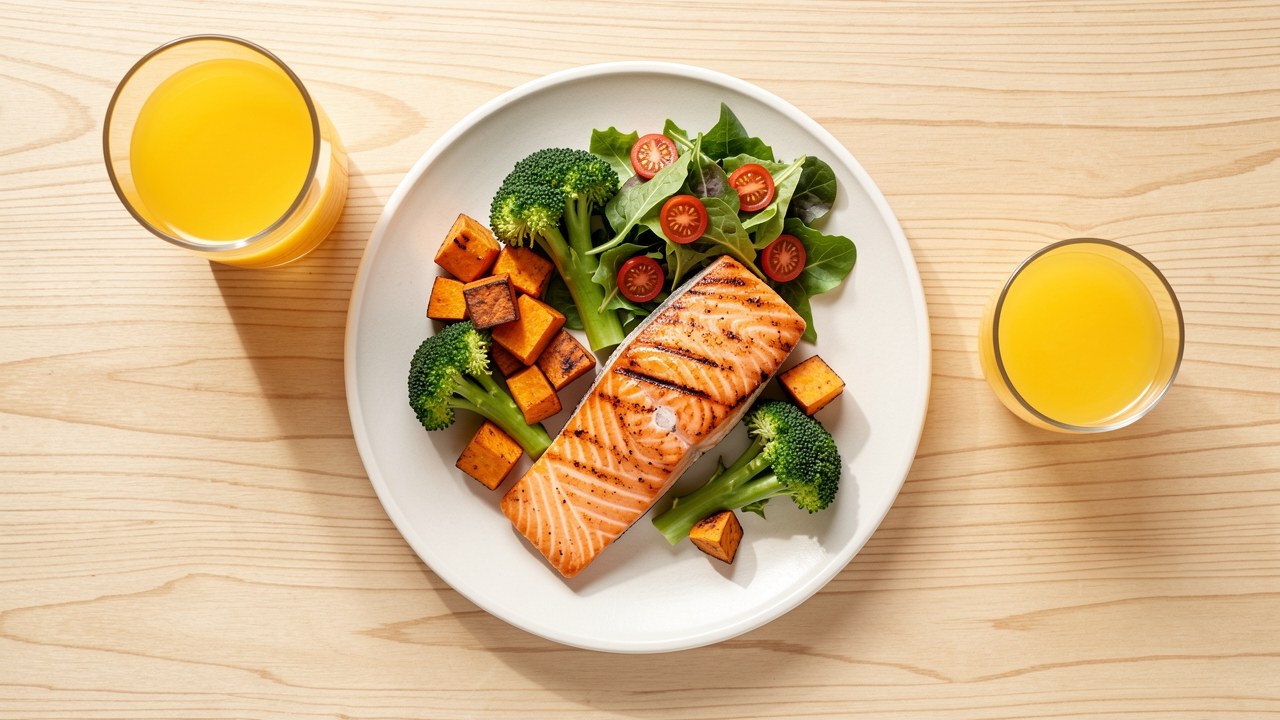
Lunch could be a salad with mixed greens (vitamin A and K), cherry tomatoes (vitamin A and C), shredded carrots (vitamin A), and almonds (vitamin E). A dressing made with olive oil (vitamin E) increases absorption of fat-soluble vitamins. For dinner, grilled salmon (preformed vitamin A) with a side of roasted sweet potatoes (vitamin A) and steamed broccoli (vitamins C and K) covers all bases.
Snacks can bridge gaps: a handful of sunflower seeds provides vitamin E, and a piece of fruit like a kiwi offers vitamin C.
- Breakfast: Spinach omelet with mushrooms and a glass of orange juice
- Lunch: Quinoa salad with kale, red bell pepper, and a lemon-tahini dressing
- Dinner: Baked chicken (or tofu for variety) with roasted carrots and sautéed Swiss chard
- Snack: Apple slices with almond butter or a handful of strawberries
Sources: MedlinePlus (National Library of Medicine), National Academies Press (US)
How Cooking and Processing Affect Vitamins A, C, E, and K
Vitamins are sensitive to heat, light, and oxygen. Vitamin C is the most fragile; it can be destroyed by heat and dissolves in water. Cooking methods that minimize water and time, such as steaming or microwaving, preserve more vitamin C than boiling.
Fat-soluble vitamins A, E, and K are more stable during cooking, but they can be lost when fats are heated to very high temperatures. Also, because these vitamins are fat-soluble, a little fat in the meal helps your body absorb them.
Processing that removes peel and outer leaves reduces vitamin content. For example, whole fruits and vegetables have more vitamins than peeled or trimmed ones. Some commercial processing, like canning, can reduce vitamins, but frozen vegetables are often comparable to fresh because they are blanched quickly.
Vitamin A from animal sources is stable during cooking, while plant carotenoids are generally stable as well. However, boiling can leach some water-soluble vitamins into the water, which is discarded.
Sample One-Day Menu to Meet Your Needs
Here is a sample day of meals that together supply vitamins A, C, E, and K. Portions are approximate and can be adjusted to your calorie needs.
Breakfast: Spinach and mushroom omelet (2 eggs) with a slice of whole-grain toast and a glass of orange juice. To boost vitamin E, cook the eggs in a little olive oil.
Lunch: A large salad with mixed greens, sliced bell peppers, shredded carrots, cherry tomatoes, and a handful of sunflower seeds. Dress with olive oil and vinegar.
Snack: A kiwi or a small bowl of strawberries (for vitamin C) and a few almonds (for vitamin E).
Dinner: Baked salmon fillet (for vitamin A and D) with a side of roasted sweet potato cubes (vitamin A) and sautéed kale (vitamins K and C). Use a drizzle of olive oil over the vegetables.
| Meal | Foods | Key Vitamins Provided |
|---|---|---|
| Breakfast | Spinach omelet, whole-grain toast, orange juice | A, C, K |
| Lunch | Salad with leafy greens, bell pepper, carrots, sunflower seeds, olive oil dressing | A, C, E, K |
| Snack | Kiwi and almonds | C, E |
| Dinner | Salmon, roasted sweet potatoes, sautéed kale | A, C, K |
Special Considerations for Different Dietary Patterns
Vegetarian and vegan diets can supply vitamins A, C, E, and K with careful planning. Since preformed vitamin A is found only in animal products, people on plant-based diets depend on provitamin A carotenoids from colorful vegetables and fruits. The body converts these into vitamin A, but conversion is less efficient, so intake may need to be higher.
Vitamin K is present in many plant foods, especially green leafy vegetables, so vegetarians usually get enough. Vitamin C and E are abundant in plant sources. For vitamin D and B12, vegans may need fortified foods or supplements, but these are not the focus here.
People with conditions that affect fat absorption, such as Crohn's disease or cystic fibrosis, may have difficulty absorbing vitamins A, E, and K because these require dietary fat. They should work with a healthcare provider to ensure adequate intake.
Frequently asked questions
What foods have all these vitamins?
No single food contains all four vitamins in significant amounts, but some foods provide two or more. For example, broccoli offers vitamin C and K, while spinach provides vitamin A and K. A balanced diet that includes a variety of fruits, vegetables, nuts, and dairy or meat will cover all four.
Sources: MedlinePlus (National Library of Medicine)Can a plant-based diet supply vitamin A, C, E, and K?
Yes. Plant-based diets can meet vitamin A needs through beta-carotene from dark green leafy vegetables and orange/yellow fruits and vegetables, which the body converts to retinol. Vitamins C, E, and K are abundant in plant foods: citrus fruits and peppers for C, nuts and seeds for E, and green vegetables for K. Including a source of fat in meals helps absorption of vitamins A, E, and K.
Sources: MedlinePlus (National Library of Medicine), USDA Food and Nutrition ServiceHow do I ensure I absorb fat-soluble vitamins A, E, K?
Eat these vitamins with some dietary fat. For example, add a drizzle of olive oil to a salad with leafy greens, or eat carrots with a dip that contains fat, such as hummus. A small amount of fat in the same meal is enough to improve absorption.
Sources: MedlinePlus (National Library of Medicine)Is fortification necessary?
In the United States, a balanced diet usually provides adequate vitamins A, C, E, and K without fortified foods. However, certain populations, such as strict vegans or people with malabsorption issues, may need fortified foods or supplements. Always consult a healthcare provider before taking supplements, as high doses of vitamin A can be toxic.
Sources: MedlinePlus (National Library of Medicine), Harvard T.H. Chan School of Public HealthWhat happens if I miss one of these vitamins for a day?
Missing a single day is unlikely to cause problems because your body has stores of fat-soluble vitamins A, E, and K in the liver and fatty tissues. Vitamin C is water-soluble and not stored, but a one-day gap can be made up the next day with a varied diet. Consistency over time matters more than daily perfection.
Sources: MedlinePlus (National Library of Medicine)Sources
- Vitamin A - Dietary Reference Intakes for Vitamin A, Vitamin K, Arsenic, Boron, Chromium, Copper, Iodine, Iron, Manganese, Molybdenum, Nickel, Silicon, Vanadium, and Zinc - NCBI Bookshelf — National Academies Press (US)
- Vitamin A - The Nutrition Source — Harvard T.H. Chan School of Public Health
- Vitamin A: MedlinePlus Medical Encyclopedia — MedlinePlus (National Library of Medicine)
- Eye on Nutrition: Vitamin A | WIC Works Resource System - USDA — USDA Food and Nutrition Service