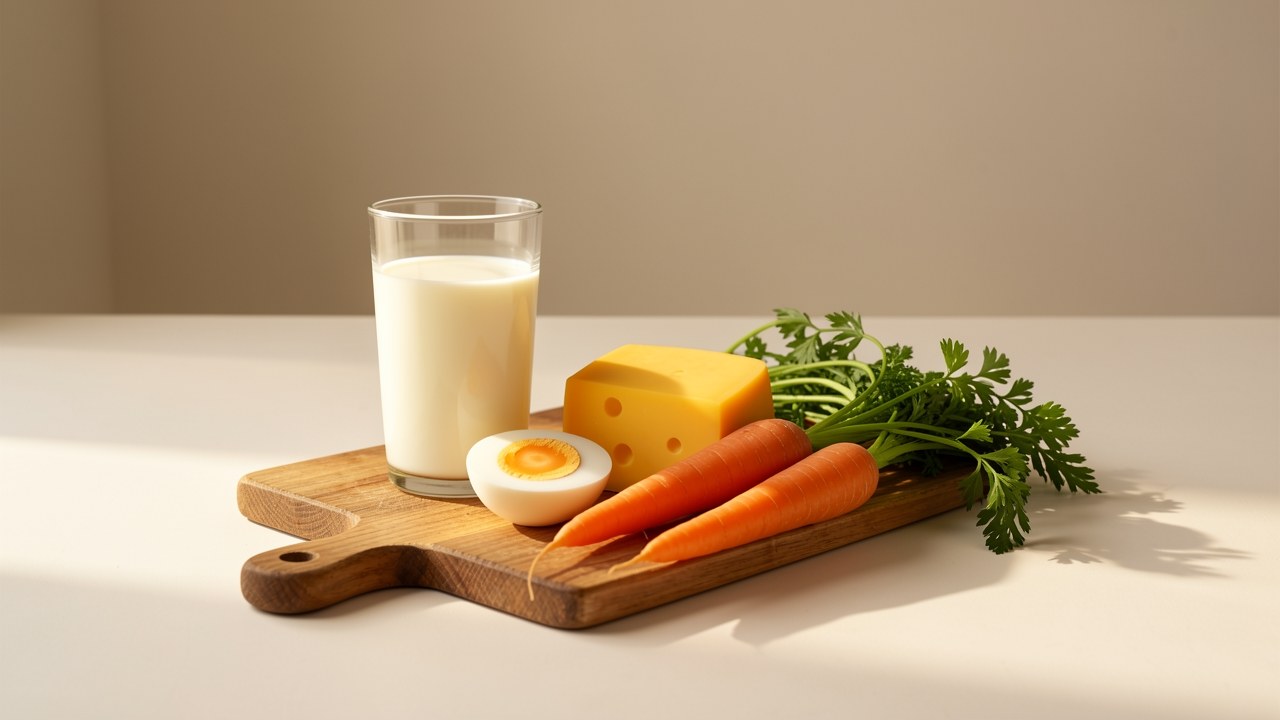
What Is Vitamin A? Preformed and Provitamin A Forms
Vitamin A is a group of fat-soluble compounds essential for vision, immune function, cellular communication, growth, and reproduction. The two main forms in the human diet are preformed vitamin A and provitamin A carotenoids.
Preformed vitamin A—retinol and retinyl esters—comes only from animal-derived foods such as liver, fish, eggs, and dairy. Provitamin A carotenoids, including beta-carotene, alpha-carotene, and beta-cryptoxanthin, are found in colorful plant foods. Your body can convert some of these carotenoids into retinol, with beta-carotene being the most common and efficient provitamin A carotenoid.
Sources: Office of Dietary Supplements (NIH), MedlinePlus (National Library of Medicine), Harvard T.H. Chan School of Public Health
Vitamin A and Vision Health
Vitamin A is crucial for normal vision, especially in low light. In the retina, it is a component of rhodopsin, a light-sensitive protein that helps you see in dim conditions. A deficiency impairs this visual cycle and can lead to night blindness.
Getting enough vitamin A supports healthy eyes, but it does not enhance vision beyond normal correction of deficiency. If you already have adequate vitamin A, consuming more will not improve your night vision or prevent age-related eye conditions.
Sources: National Academies Press (US), Linus Pauling Institute, Oregon State University
The Immune System and Vitamin A
Vitamin A helps maintain the integrity of epithelial cells, which line your respiratory, digestive, and reproductive tracts. These barriers are your body's first line of defense against pathogens. Vitamin A also supports the production and activity of white blood cells and natural killer cells, key components of your immune response.
Sources: National Academies Press (US), Harvard T.H. Chan School of Public Health
Cell Growth and Reproduction
Vitamin A is necessary for normal cell growth, differentiation, and reproduction. The active form, retinoic acid, regulates the expression of numerous genes by binding to nuclear retinoic acid receptors. This gene regulation influences the development of tissues and organs, and is essential for embryonic development.
Because of its role in cell differentiation, vitamin A is particularly important during pregnancy and childhood, but it must be carefully balanced—too much preformed vitamin A can be toxic and cause birth defects.
Sources: National Academies Press (US), Linus Pauling Institute, Oregon State University, Mayo Clinic
Vitamin A and Skin Health
Vitamin A is required for the health of skin and mucous membranes. It supports the renewal and differentiation of skin cells, helping to maintain a strong skin barrier. This is why vitamin A derivatives are used in dermatology, but prescription topical retinoids are medications, not dietary supplements.
There is no strong evidence from the authoritative sources reviewed here that dietary vitamin A supplements help acne. Prescription retinoids are used for acne but are not the same as dietary vitamin A.
Sources: National Academies Press (US), Harvard T.H. Chan School of Public Health
How Much Do You Need? RDA Overview
Your vitamin A requirement is expressed in micrograms of retinol activity equivalents (RAE). This unit accounts for the different bioactivities of retinol and provitamin A carotenoids: 1 mcg RAE equals 1 mcg retinol, 12 mcg dietary beta-carotene, 24 mcg dietary alpha-carotene, or 24 mcg dietary beta-cryptoxanthin.
The Recommended Dietary Allowance (RDA) for vitamin A is 900 mcg RAE per day for adult men and 700 mcg RAE per day for adult women. During pregnancy and breastfeeding, needs increase: 770 mcg RAE per day for pregnant women and 1,300 mcg RAE per day for breastfeeding women.
Sources: National Academies Press (US), UConn Extension, University of Connecticut, MedlinePlus (National Library of Medicine)
Getting Vitamin A from Diet
A balanced diet usually provides enough vitamin A. Preformed retinol is found only in animal foods, while provitamin A carotenoids are abundant in fruits and vegetables. Your body uses what it needs and stores excess in the liver, so you do not need to consume vitamin A every day.
- Animal sources of retinol: liver (beef liver, chicken liver), fish oils, eggs, and dairy products.
- Plant sources of beta-carotene: sweet potatoes, carrots, spinach, kale, butternut squash, and mangoes.
Sources: UConn Extension, University of Connecticut, MedlinePlus (National Library of Medicine)
Best Animal Sources of Retinol (Vitamin A)
Liver is exceptionally rich in retinol, but because of the high concentration, eating liver more than once a week may lead to excessive intake. Other animal sources include fish, eggs, and fortified dairy products like milk and yogurt.
- Beef liver (cooked, 3 ounces): about 6,580 mcg RAE
- Chicken liver (cooked, 3 ounces): about 4,000 mcg RAE
- Egg (large, boiled): about 75 mcg RAE
- Whole milk (1 cup): about 149 mcg RAE
Sources: UConn Extension, University of Connecticut, MedlinePlus (National Library of Medicine)
Best Plant Sources of Beta-Carotene (Provitamin A)
Beta-carotene is the most common provitamin A carotenoid in foods. Plant sources are safe because the body converts beta-carotene to vitamin A only as needed, and high intake from food does not cause vitamin A toxicity.
To optimize absorption, eat these foods with a small amount of fat, such as a drizzle of olive oil or a few nuts.
- Sweet potato (baked, 1 medium): about 1,400 mcg RAE
- Carrots (raw, 1 cup chopped): about 1,000 mcg RAE
- Spinach (cooked, 1 cup): about 940 mcg RAE
- Butternut squash (cooked, 1 cup): about 1,100 mcg RAE
How to Enhance Absorption and Cooking Tips
Vitamin A is fat-soluble, so absorption is enhanced by dietary fat. Retinol and retinyl esters are absorbed at 70–90% efficiency. Carotenoid absorption is more variable and improves when plant sources are cooked and eaten with a small amount of fat.
Cooking methods that soften plant cell walls—such as steaming or roasting—can increase the bioavailability of beta-carotene. Chopping or pureeing also helps.
- Add a small amount of olive oil or avocado to salads with carrots or spinach.
- Cook tomatoes and carrots in a little oil to release more carotenoids.
- If you follow a low-fat diet, include nuts, seeds, or fatty fish to help absorb vitamin A from foods.
Sources: National Academies Press (US), MedlinePlus (National Library of Medicine), Harvard T.H. Chan School of Public Health
Sample Vitamin A-Rich Meal Ideas
These meal ideas combine animal and plant sources to help you meet your daily vitamin A needs. They are general suggestions, not complete recipes with exact quantities.
- Breakfast: Scrambled eggs with spinach and a side of cantaloupe.
- Lunch: Salad with grilled chicken, shredded carrots, and a vinaigrette made with olive oil.
- Dinner: Baked salmon with roasted sweet potatoes and steamed kale.
- Snack: Carrot sticks with hummus.
How Vitamin A Intake Is Measured: RAE and IU
Historically, vitamin A was measured in international units (IU), but the U.S. FDA now requires manufacturers to label vitamin A in micrograms of retinol activity equivalents (RAE) on Nutrition Facts panels. This change began in 2020 to reflect the different biological activities of retinol and carotenoids.
RAE is a more accurate measure because it accounts for the conversion efficiency of provitamin A carotenoids. For example, 1 mcg RAE is equivalent to 1 mcg retinol, but you need 12 mcg of dietary beta-carotene to provide the same activity.
Recommended Dietary Allowances (RDA) for Vitamin A by Age and Sex
The table below presents the RDA for vitamin A in mcg RAE per day, based on data from the National Academies and corroborated by the NIH Office of Dietary Supplements.
| Life stage | RDA (mcg RAE/day) |
|---|---|
| Men 19+ years | 900 |
| Women 19+ years | 700 |
| Pregnancy 19+ years | 770 |
| Breastfeeding 19+ years | 1,300 |
Sources: National Academies Press (US), UConn Extension, University of Connecticut, MedlinePlus (National Library of Medicine)
Tolerable Upper Intake Levels (UL) to Prevent Toxicity
Excess intake of preformed vitamin A can cause toxicity, leading to symptoms such as liver damage, bone pain, and birth defects. The tolerable upper intake level (UL) for preformed vitamin A is 3,000 mcg per day for adults. This applies only to preformed retinol, not to beta-carotene from food, which is not associated with toxicity.
Beta-carotene from food is safe, but high-dose beta-carotene supplements have been studied for potential risks in smokers. Always avoid exceeding the UL for preformed vitamin A.
Sources: National Academies Press (US), UConn Extension, University of Connecticut, Harvard T.H. Chan School of Public Health
Special Considerations for Pregnancy and Breastfeeding
During pregnancy, vitamin A is critical for fetal development, but excessive preformed vitamin A can cause birth defects. Pregnant women should avoid high-dose supplements and eating liver more than once a week. The RDA during pregnancy is 770 mcg RAE per day, and the UL is the same as for non-pregnant adults—3,000 mcg per day.
Breastfeeding women need more vitamin A—1,300 mcg RAE per day—to support milk production and infant growth.
Sources: UConn Extension, University of Connecticut, Mayo Clinic
How to Estimate Your Vitamin A Intake From Foods
To estimate your intake, check Nutrition Facts labels, which now list vitamin A in mcg RAE. For whole foods, use USDA food composition data, but you can also estimate by understanding serving sizes.
For example, a baked sweet potato (about 1 medium) provides roughly 1,400 mcg RAE, which exceeds the RDA for women. A cup of cooked spinach provides about 940 mcg RAE. Combining foods helps you meet your daily target.
Absorption of Retinol and Beta-Carotene in the Small Intestine
Absorption begins in the small intestine. Retinol from animal foods is efficiently absorbed (70–90% efficiency). Beta-carotene and other provitamin A carotenoids are absorbed less efficiently because they must first be released from the plant matrix and then converted in the intestinal wall. Factors like cooking and fat enhance this process.
Sources: National Academies Press (US)
Factors That Enhance Vitamin A Absorption: Dietary Fat and Cooking
Several dietary habits improve absorption of both retinol and carotenoids:
Including a source of fat with your meal, such as olive oil, nuts, or avocado.
Cooking and processing plant foods to break down cell walls.
Eating carotenoid-rich foods with a small amount of fat, as in a salad with oil-based dressing.
Sources: MedlinePlus (National Library of Medicine), Harvard T.H. Chan School of Public Health
Factors That Impair Absorption: Low-Fat Diets, Digestive Disorders, and Medications
Some conditions and dietary patterns can reduce vitamin A absorption:
Very low-fat diets may hinder absorption because vitamin A is fat-soluble.
Digestive disorders that affect fat absorption, such as celiac disease or Crohn's disease, can impair uptake.
Certain medications, including the weight-loss drug orlistat, can interfere with fat-soluble vitamin absorption.
Conversion of Beta-Carotene to Vitamin A and Its Efficiency
The body converts beta-carotene to retinol in the small intestine and liver. However, the conversion is not one-to-one: about 12 mcg of dietary beta-carotene is needed to produce 1 mcg RAE. For alpha-carotene and beta-cryptoxanthin, the ratio is 24:1. This lower efficiency is why plant sources are less concentrated in vitamin A activity than animal sources.
Sources: National Academies Press (US)
Practical Tips for Improving Vitamin A Absorption
To make sure you absorb enough vitamin A from your diet:
Include healthy fats at meals—even a small amount helps.
Cook vegetables like carrots and spinach rather than eating them raw.
If you are concerned about deficiency, consult a healthcare professional. Vitamin A deficiency is rare in the United States, but symptoms like night blindness or dry eyes may indicate a problem. A blood test can assess retinol levels.
Sources: MedlinePlus (National Library of Medicine), Harvard T.H. Chan School of Public Health
Frequently asked questions
Can vitamin A improve night vision?
Vitamin A is essential for normal vision, especially in low light. If you are deficient, supplementing can restore normal night vision. However, for people with adequate vitamin A, taking extra will not improve night vision beyond the normal range. There is no evidence in the authoritative sources that extra vitamin A enhances vision in well-nourished individuals.
Sources: National Academies Press (US), Linus Pauling Institute, Oregon State UniversityDoes vitamin A help acne?
While vitamin A is important for skin health, dietary vitamin A is not a treatment for acne. Prescription topical retinoids, which are derivatives of vitamin A, are used medically for acne, but they are not dietary supplements. The evidence reviewed does not support taking oral vitamin A supplements for acne.
Sources: National Academies Press (US), Harvard T.H. Chan School of Public HealthIs beta-carotene as effective as retinol?
Beta-carotene is not as bioavailable as retinol. To achieve the same vitamin A activity, you need to consume more beta-carotene: 12 mcg of dietary beta-carotene provides 1 mcg RAE, compared with 1 mcg of retinol. For practical purposes, a diet rich in colorful vegetables can meet your needs, but animal sources provide more efficient vitamin A.
Sources: National Academies Press (US)What happens if I don't get enough vitamin A?
Vitamin A deficiency can lead to night blindness, dry eyes, and increased susceptibility to infections because of weakened immune barriers. In severe cases, it can cause blindness and impair growth. However, deficiency is relatively rare in the United States. If you suspect a deficiency, see a healthcare provider for proper testing and advice.
Sources: Office of Dietary Supplements (NIH), Linus Pauling Institute, Oregon State UniversityCan too much vitamin A be harmful?
Yes, excessive intake of preformed vitamin A (retinol) can be toxic, causing symptoms like liver damage, bone pain, and birth defects. The tolerable upper intake level for adults is 3,000 mcg of preformed vitamin A per day. In contrast, beta-carotene from food is not associated with toxicity, though high-dose beta-carotene supplements have been studied for potential risks in smokers.
Sources: National Academies Press (US), UConn Extension, University of Connecticut, Harvard T.H. Chan School of Public HealthIs it better to get vitamin A from animal or plant sources?
Both are valuable. Animal sources provide preformed retinol, which is efficiently absorbed. Plant sources provide beta-carotene and other provitamin A carotenoids, which are safer because the body converts them as needed. A balanced diet that includes both is ideal; it is not about choosing one over the other.
Sources: National Academies Press (US), MedlinePlus (National Library of Medicine)Can you get too much vitamin A from foods alone?
It is unlikely, but possible if you regularly eat large amounts of liver, which is extremely high in retinol. Eating liver more than once a week may lead to excessive intake and toxicity. Beta-carotene from plant foods does not cause vitamin A toxicity, though very high intakes can cause a harmless yellowish skin discoloration called carotenodermia.
Sources: UConn Extension, University of Connecticut, MedlinePlus (National Library of Medicine)What are the best vegetarian sources of vitamin A?
Vegetarians can meet vitamin A needs with provitamin A carotenoids from colorful fruits and vegetables. Good sources include sweet potatoes, carrots, spinach, kale, butternut squash, and mangoes. To enhance absorption, eat these with a small amount of fat.
Sources: MedlinePlus (National Library of Medicine)Sources
- Vitamin A - Dietary Reference Intakes for Vitamin A, Vitamin K, Arsenic, Boron, Chromium, Copper, Iodine, Iron, Manganese, Molybdenum, Nickel, Silicon, Vanadium, and Zinc - NCBI Bookshelf — National Academies Press (US)
- Understanding Vitamin A: Sources, Benefits and Cautions — UConn Extension, University of Connecticut
- Vitamin A and Carotenoids - Health Professional Fact Sheet — Office of Dietary Supplements (NIH)
- Vitamin A: MedlinePlus Medical Encyclopedia — MedlinePlus (National Library of Medicine)
- Vitamin A - The Nutrition Source — Harvard T.H. Chan School of Public Health
- Vitamin A | Linus Pauling Institute | Oregon State University — Linus Pauling Institute, Oregon State University
- Vitamin A - Mayo Clinic — Mayo Clinic