What Is Vitamin E and Its Forms?
Vitamin E is a fat-soluble vitamin, meaning it dissolves in fat and is stored in your body's fatty tissues. It exists in several forms, but alpha-tocopherol is the only one that is maintained in human plasma and contributes to meeting your vitamin E requirement. Other forms of vitamin E are not converted to alpha-tocopherol and do not fulfill the body's needs the same way.
This distinction matters for both diet and supplements: when you see 'vitamin E' on a label or in nutrition information, it typically refers to alpha-tocopherol. Your body selectively retains this form, and it is the one that has been most studied for its biological effects.
Sources: National Academies Press (US), Harvard T.H. Chan School of Public Health
Antioxidant Protection of Cell Membranes
Vitamin E's primary job is to act as a chain-breaking antioxidant, protecting cell membranes from lipid peroxidation. In simple terms, cell membranes are made of fats that are vulnerable to damage from free radicals—unstable molecules that can harm cells. Vitamin E steps in and neutralizes these free radicals, preventing a cascade of damage that might otherwise compromise the membrane's integrity.
Because vitamin E is fat-soluble, it embeds itself within the lipid bilayer of cell membranes, placed exactly where it can intercept free radicals before they trigger oxidative stress. This protection is considered a fundamental reason why vitamin E is essential for overall cellular health.
Sources: National Academies Press (US), Harvard T.H. Chan School of Public Health
Vitamin E and Immune Function
Vitamin E also supports the immune system. Research indicates that adequate levels are necessary for normal immune function. In deficiency, immune function is decreased, which suggests that vitamin E plays a role in maintaining a healthy immune response.
However, the evidence does not support the idea that high-dose supplements will supercharge immunity. Getting the recommended amount from food is generally sufficient to support your body's defense mechanisms.
Sources: National Academies Press (US), Harvard T.H. Chan School of Public Health
Other Roles: Skin Health, Eye Health
Beyond its antioxidant and immune roles, vitamin E is often associated with skin and eye health. Its ability to protect cell membranes is thought to extend to skin cells and the delicate tissues of the eye, where oxidative stress is a concern.
These benefits are best achieved through a balanced diet that includes vitamin E-rich foods. Supplements may be marketed for these purposes, but the evidence for high-dose supplementation is not conclusive.
How Much Vitamin E Do You Need (RDA)
The Recommended Dietary Allowance (RDA) for vitamin E for adults is 15 mg per day of alpha-tocopherol. This applies to both men and women aged 14 and older.
The Tolerable Upper Intake Level (UL) for supplemental vitamin E is 1,000 mg per day of any form of alpha-tocopherol. This upper limit is based on the increased tendency to hemorrhage that can occur at higher intakes, mainly from supplements. It is important to note that the UL applies to supplemental vitamin E, not the amounts naturally present in food.
Most people can meet the RDA through diet alone, making supplements unnecessary unless specifically advised by a healthcare provider.
- Adults (14+ years): 15 mg/day RDA
- Upper limit from supplements: 1,000 mg/day
Sources: National Academies Press (US), Harvard T.H. Chan School of Public Health
Food Sources and How to Incorporate Them
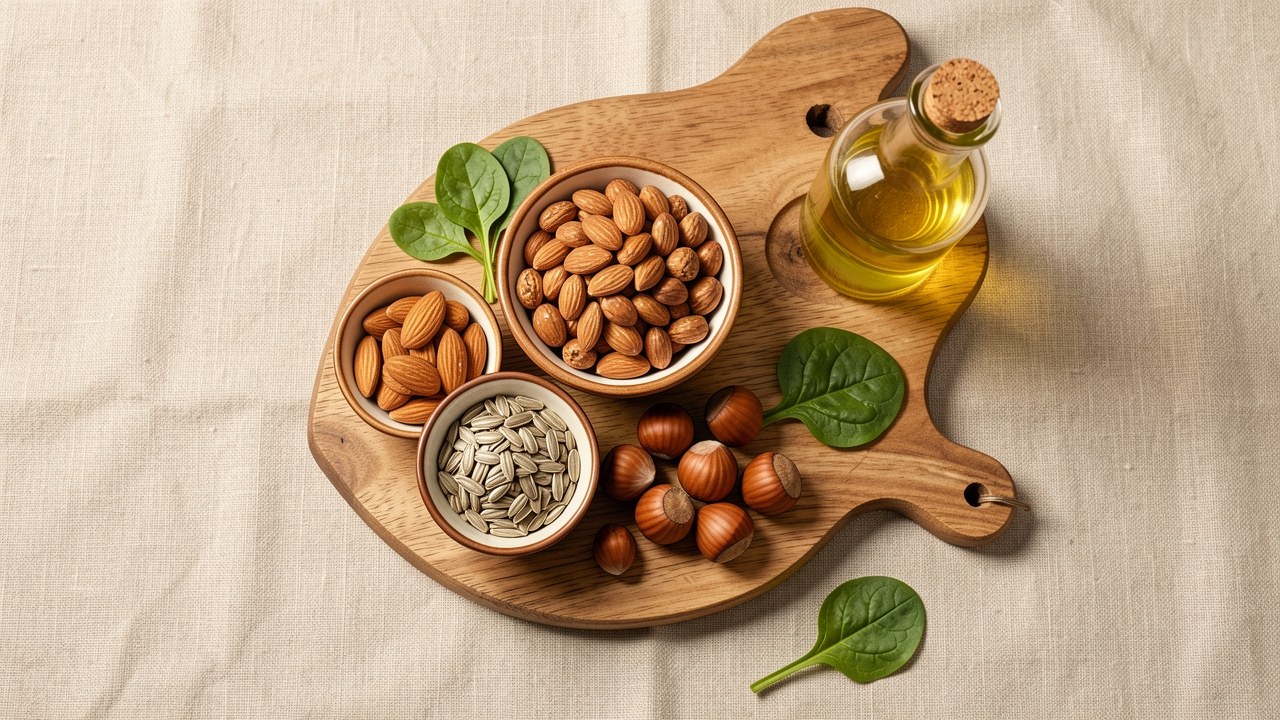
Vitamin E is found in a variety of plant-based oils, nuts, seeds, fruits, and vegetables. Rich sources include wheat germ oil, sunflower seeds, almonds, and spinach. Adding these to your daily meals can help you meet your vitamin E needs without supplements.
For example, a handful of sunflower seeds or almonds makes a convenient snack, and using wheat germ oil in salad dressings or baking can boost your intake. Cooking with vegetable oils like sunflower or safflower oil also contributes to vitamin E, though deep-frying should be limited for overall health.
Vitamin E is best absorbed when consumed with some dietary fat, as it is fat-soluble. Incorporating these foods into a meal that contains some healthy fat, such as a spinach salad with a vinaigrette (which often uses oil), is a practical way to enhance absorption.
- Wheat germ oil
- Sunflower seeds
- Almonds
- Spinach
- Other nuts and seeds, vegetable oils, fruits, and vegetables
What Is Vitamin K? Forms and Function
Vitamin K is another fat-soluble vitamin, but its main roles are quite different from vitamin E's. It comes in two main dietary forms: vitamin K1 (phylloquinone), found in green leafy vegetables, and vitamin K2 (menaquinones), found in fermented foods and animal products.
Vitamin K acts as a cofactor for an enzyme that modifies certain proteins, enabling them to bind calcium. This function is critical for blood clotting and bone metabolism.
- Vitamin K1: phylloquinone, from plants
- Vitamin K2: menaquinones, from fermented foods and animal products
Sources: Linus Pauling Institute, Oregon State University, FoodStruct
Role in Blood Clotting
Vitamin K is essential for blood clotting. It is required for the production of several clotting factors—specifically factors II, VII, IX, and X, as well as proteins C, S, and Z. Without vitamin K, these proteins cannot become fully functional, which impairs the body's ability to form clots and stop bleeding.
This is why medications like warfarin, which is a vitamin K antagonist, work to reduce clotting by interfering with vitamin K recycling.
Vitamin K and Bone Health
Vitamin K also plays a part in bone health. It helps activate osteocalcin and matrix Gla protein, which are involved in regulating calcium deposition in bone and cartilage. Adequate vitamin K intake is associated with proper bone mineralization, though more research is needed to fully understand its effect on fracture risk.
Nonetheless, getting enough vitamin K from your diet supports both bone and vascular health.
Sources: Linus Pauling Institute, Oregon State University, FoodStruct
Recommended Intake for Vitamin K
Unlike vitamin E, there is no established RDA for vitamin K; instead, an Adequate Intake (AI) has been set. For adults 19 years and older, the AI is 120 micrograms per day for men and 90 micrograms per day for women.
No Tolerable Upper Intake Level has been established for vitamin K. This does not mean that extremely high doses are safe; it simply reflects a lack of evidence to set an upper limit.
- Men (19+ years): 120 micrograms/day AI
- Women (19+ years): 90 micrograms/day AI
Sources: Linus Pauling Institute, Oregon State University, FoodStruct
Top Food Sources of Vitamin K
Vitamin K is abundant in green leafy vegetables, with primary dietary form being phylloquinone (K1). Foods like kale, spinach, and other greens are excellent choices. Vitamin K2 is found in fermented foods and animal products, such as natto (fermented soybeans) and certain cheeses.
A diet rich in vegetables will typically provide ample vitamin K1. Including some fermented foods can add K2, although amounts vary.
- Green leafy vegetables (e.g., kale, spinach) — high in vitamin K1
- Fermented foods (e.g., natto) — contain vitamin K2
- Animal products (e.g., certain cheeses, egg yolks) — contain smaller amounts of K2
Sources: Linus Pauling Institute, Oregon State University, FoodStruct
Factors Affecting Vitamin K Absorption
Like vitamin E, vitamin K is fat-soluble and requires dietary fat for optimal absorption. However, even with adequate fat, absorption from some foods can be quite poor.
The low absorption is partly because vitamin K is tightly bound within the plant's structure. Chopping, cooking, or adding oil may help release more vitamin K, but the effect varies by food and preparation.
Vitamin K and Medication Interactions
Vitamin K interacts with several medications, most notably warfarin. Warfarin acts as a vitamin K antagonist by inhibiting the enzyme that recycles vitamin K, thereby reducing the availability of active vitamin K and slowing blood clotting. This is why doctors often tell patients on warfarin to keep their vitamin K intake consistent—so that the anticoagulant effect doesn't fluctuate.
If you take warfarin or other blood thinners, it is essential to discuss your diet with your healthcare provider. Do not abruptly change your intake of vitamin K-rich foods or supplements without medical advice, as this could affect your medication's effectiveness and safety.
Deficiency Symptoms and Toxicity Risks
Vitamin E deficiency is rare in the United States. When it does occur, symptoms can include peripheral neuropathy (nerve damage causing numbness or weakness), ataxia (loss of coordination), retinopathy (damage to the retina), and decreased immune function. Deficiency is more likely in people with conditions that impair fat absorption.
Vitamin K deficiency is more common in newborns and in people with fat malabsorption. Its main consequence is impaired blood clotting and an increased bleeding risk.
Concerning toxicity, vitamin E is generally safe when consumed within the UL. However, high-dose supplements (above 1,000 mg/day) can increase the tendency to hemorrhage. There is no established UL for vitamin K, but that does not mean high doses are harmless; most people should not need to take large amounts of supplemental vitamin K.
- Vitamin E: toxicity from supplements, especially above 1,000 mg/day, can increase bleeding risk.
- Vitamin K: no established upper level, but high doses from supplements are not recommended without medical supervision.
Sources: National Academies Press (US), FoodStruct, NCBI
Frequently asked questions
Can vitamin E prevent heart disease?
Vitamin E supplementation has not been consistently shown to prevent cardiovascular disease. A 2022 USPSTF review found no conclusive benefit and recommended against using vitamin E supplements for that purpose. Getting vitamin E from food as part of a healthy diet is still important for overall health.
Sources: Harvard T.H. Chan School of Public HealthWhat are the symptoms of vitamin E deficiency?
Clinical vitamin E deficiency is rare in the United States, but when it occurs, it can cause peripheral neuropathy, ataxia, retinopathy, and decreased immune function.
Sources: National Academies Press (US), Harvard T.H. Chan School of Public HealthAre vitamin E supplements necessary?
Most people can meet the RDA of 15 mg per day through a balanced diet, so supplements are not generally necessary. High doses can be harmful, so it's best to focus on food sources and consult a healthcare provider before starting supplements.
Sources: National Academies Press (US), Harvard T.H. Chan School of Public HealthWhich foods are highest in vitamin E?
Rich food sources of vitamin E include wheat germ oil, sunflower seeds, almonds, and spinach. Other nuts, seeds, and vegetable oils also contribute.
Sources: Harvard T.H. Chan School of Public HealthDoes vitamin E interact with blood thinners?
High-dose vitamin E supplements may increase the risk of bleeding, especially when combined with blood-thinning medications such as warfarin. If you take any anticoagulant, talk to your doctor before using vitamin E supplements.
Sources: Harvard T.H. Chan School of Public Health, NCBICan vitamin E prevent chronic diseases?
There is no consistent evidence that high-dose vitamin E supplements prevent chronic diseases like heart disease or cancer. The antioxidant properties of vitamin E from food may support health, but supplements have not been shown to provide the same benefit.
Sources: Harvard T.H. Chan School of Public HealthIs it safe to take vitamin E supplements?
Vitamin E supplements are generally safe when taken within the UL of 1,000 mg per day. However, doses above that can increase bleeding risk. Certain medications and health conditions may require extra caution, so it's best to seek medical advice before starting high-dose supplements.
Sources: Harvard T.H. Chan School of Public Health, NCBIHow does vitamin E interact with vitamin C?
Vitamin E and vitamin C work together as antioxidants. Vitamin C, which is water-soluble, can help regenerate vitamin E after it has neutralized free radicals. This interaction is supported by research, but the evidence provided does not detail the exact mechanisms or dosages.
Sources: Harvard T.H. Chan School of Public HealthSources
- Vitamin E - Dietary Reference Intakes for Vitamin C, Vitamin E, Selenium, and Carotenoids - NCBI Bookshelf — National Academies Press (US)
- Vitamin E and Your Health - The Nutrition Source — Harvard T.H. Chan School of Public Health
- Vitamin K | Linus Pauling Institute | Oregon State University — Linus Pauling Institute, Oregon State University
- Vitamin K — Health Benefits, Food Sources, Uses, & Dosage — FoodStruct
- Vitamin E Toxicity - StatPearls - NCBI Bookshelf — NCBI