What Is Vitamin C and Why Is It Essential?
Vitamin C, also known as ascorbic acid, is a water-soluble nutrient found in many fruits and vegetables. Unlike some animals, humans cannot make vitamin C on their own, so you must get it from your diet every day.
This vitamin is essential for a range of everyday functions. It helps you absorb iron from plant foods, keeps your immune system on track, and supports the production of collagen, a protein that helps wounds heal.
Because your body does not store large amounts of water-soluble vitamins, you need a steady supply through foods or supplements to avoid falling short.
- Water-soluble nutrient: dissolves in water and is not stored in large amounts.
- Essential: humans cannot synthesize it endogenously.
- Supports: collagen production, iron absorption, and immune function.
Sources: Office of Dietary Supplements, National Institutes of Health
Antioxidant Functions and Collagen Synthesis
Vitamin C is a powerful antioxidant. It helps protect your cells from damage caused by free radicals, which are unstable molecules that can harm cells and contribute to aging and disease.
Beyond that, vitamin C is a required cofactor for making collagen. Collagen is a structural protein found in skin, tendons, ligaments, and blood vessels. It is crucial for wound healing and for maintaining the strength and integrity of tissues throughout your body.
By supporting collagen synthesis, vitamin C helps keep your skin resilient and your blood vessels healthy.
- Acts as an antioxidant, protecting cells from free radical damage.
- Needed to make collagen, a protein that helps wounds heal.
- Contributes to skin, tendon, and blood vessel health.
Sources: Office of Dietary Supplements, National Institutes of Health
Vitamin C and Immune Health
Vitamin C helps your immune system work properly to protect you from disease. It supports various immune cells and helps them function efficiently.
While vitamin C is vital for immunity, research shows that for most people, taking vitamin C supplements does not reduce the risk of catching the common cold. However, if you take vitamin C regularly, you might experience slightly shorter colds or milder symptoms.
Taking vitamin C after cold symptoms start does not appear to be helpful. So, while a healthy intake of vitamin C supports your immune system, it is not a cure for colds.
- Supports the proper function of the immune system.
- Regular supplementation may slightly shorten colds or reduce symptom severity.
- Starting supplements after cold symptoms appear is not shown to be beneficial.
Sources: Office of Dietary Supplements, National Institutes of Health
Recommended Dietary Allowance (RDA)
How much vitamin C you need each day depends on your age, sex, and certain lifestyle factors. The Recommended Dietary Allowance (RDA) is the average daily intake that meets the needs of most healthy people.
For adult men aged 19 years and older, the RDA is 90 milligrams (mg) per day. For adult women in the same age group, it is 75 mg per day.
If you smoke, you need 35 mg more per day than non‑smokers because smoking increases oxidative stress and depletes vitamin C. Pregnancy and breastfeeding also raise needs, so it is important to check specific recommendations for those life stages.
- Men (19+ years): 90 mg/day
- Women (19+ years): 75 mg/day
- Smokers: add 35 mg/day
- Upper limit for adults: 2,000 mg/day
Sources: Office of Dietary Supplements, National Institutes of Health
Top Food Sources of Vitamin C
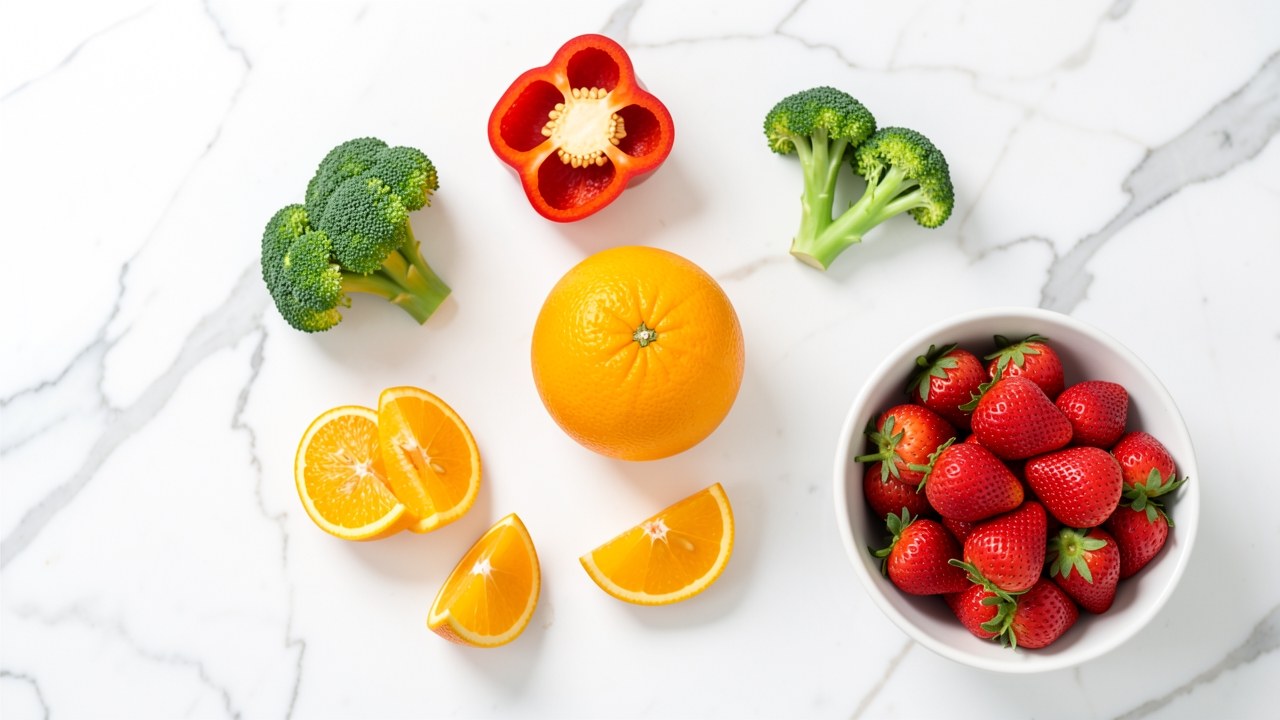
Many fruits and vegetables are rich in vitamin C. Citrus fruits like oranges and grapefruit, and their juices, are well‑known sources, but you will also find high amounts in red and green peppers and kiwifruit.
To help you choose, here is a table of common foods with their approximate vitamin C content per serving. These values are based on standard serving sizes.
- Citrus fruits and juices (oranges, grapefruit)
- Red and green peppers
- Kiwifruit
- Other good sources: strawberries, broccoli, tomatoes, and leafy greens.
| Food | Serving | Vitamin C (mg) |
|---|---|---|
| Red pepper | ½ cup, raw | 95 |
| Orange | 1 medium | 70 |
| Green pepper | ½ cup, raw | 60 |
| Grapefruit juice | ¾ cup | 70 |
| Kiwifruit | 1 medium | 64 |
| Broccoli | ½ cup, cooked | 51 |
| Strawberries | ½ cup, sliced | 49 |
Sources: Office of Dietary Supplements, National Institutes of Health
Cooking and Storage Tips to Preserve Vitamin C
Vitamin C is water‑soluble and sensitive to heat, light, and air. Its content in food can be reduced by prolonged storage and by cooking.
To get the most vitamin C from your meals, try gentle cooking methods. Steaming or microwaving may lessen cooking losses compared with boiling, because less water and shorter cooking times help preserve the vitamin.
Also, store fresh produce properly and use it within a few days to limit losses over time. Cutting fruits and vegetables just before eating can also help keep vitamin C intact.
- Choose steaming or microwaving over boiling when you can.
- Store produce for short periods and prepare it close to serving time.
- Eat raw produce when possible, as heat can destroy vitamin C.
Sources: Office of Dietary Supplements, National Institutes of Health
Signs of Deficiency and Toxicity
Vitamin C deficiency is rare in the United States and Canada. Still, people who get little or no vitamin C — below about 10 mg per day — for many weeks can develop scurvy.
Signs of scurvy include fatigue, inflammation of the gums, small red or purple spots on the skin, joint pain, poor wound healing, and corkscrew hairs.
Too much vitamin C is generally not toxic, but taking very high doses can cause digestive issues. Symptoms of excess include diarrhea, nausea, and stomach cramps. The daily upper limit for adults is 2,000 mg, from both food and supplements.
Because vitamin C is water‑soluble, extra amounts are usually excreted in urine, but it is still wise to stay within the recommended limits to avoid discomfort.
- Deficiency: scurvy can occur with intake below ~10 mg/day for weeks.
- Scurvy signs: fatigue, gum inflammation, red/purple spots, joint pain, poor wound healing, corkscrew hairs.
- Toxicity symptoms: diarrhea, nausea, stomach cramps.
- Upper limit: 2,000 mg/day for adults.
Sources: Office of Dietary Supplements, National Institutes of Health
Frequently asked questions
Can vitamin C prevent the common cold?
For most people, vitamin C supplements do not reduce the risk of getting the common cold. However, people who take vitamin C supplements regularly might have slightly shorter colds or somewhat milder symptoms when they do get one. Taking vitamin C after cold symptoms start does not appear to be helpful.
Sources: Office of Dietary Supplements, National Institutes of HealthWhat foods have the most vitamin C?
Foods that have a lot of vitamin C include citrus fruits (oranges, grapefruit) and their juices, red and green peppers, kiwifruit, strawberries, broccoli, and tomatoes. Red peppers and kiwifruit are particularly rich sources.
Sources: Office of Dietary Supplements, National Institutes of HealthHow much vitamin C is too much?
The daily upper limit for vitamin C for adults is 2,000 mg. Taking more than this can cause diarrhea, nausea, and stomach cramps. Consuming amounts within the recommended dietary allowance is safe for most people.
Sources: Office of Dietary Supplements, National Institutes of HealthDoes cooking destroy vitamin C?
Yes, vitamin C content can be reduced by cooking, especially with long cooking times and in water. To lessen losses, choose gentler methods like steaming or microwaving, and avoid overcooking vegetables.
Sources: Office of Dietary Supplements, National Institutes of HealthIs it better to take vitamin C supplements?
For most people, getting vitamin C from food is recommended because foods also provide other beneficial nutrients. Supplements can help those with limited diets or increased needs, but they are not a substitute for a balanced diet. It is best to aim for the RDA through food first, and use supplements if needed to fill gaps.
Sources: Office of Dietary Supplements, National Institutes of HealthSources
- Vitamin C - Health Professional Fact Sheet — Office of Dietary Supplements, National Institutes of Health
- vitaminc-Consumer.pdf — Office of Dietary Supplements, National Institutes of Health
- Vitamin C - Consumer — Office of Dietary Supplements, National Institutes of Health