Chemical forms
Vitamins A and C are essential nutrients, but they belong to different chemical families and behave differently in your body. Vitamin A is fat-soluble, meaning it dissolves in fat and can be stored in your liver and fatty tissues. Vitamin C is water-soluble, so it dissolves in water and is not stored in large amounts; any excess is excreted in urine.
Vitamin A exists in two main forms: preformed vitamin A (retinol and related compounds) found in animal products, and provitamin A carotenoids like beta-carotene found in plant foods. Your body can convert certain carotenoids into active vitamin A.
Vitamin C is a single compound, L-ascorbic acid, but it is often present in foods alongside other antioxidants. The distinction in solubility affects how you need to consume these vitamins, as described throughout this guide.
- Vitamin A: fat-soluble; includes retinol, retinal, retinoic acid, and provitamin A carotenoids.
- Vitamin C: water-soluble; chemically known as ascorbic acid.
- Because vitamin A is stored, you do not need to consume it every day, but excess can build up.
- Because vitamin C is not stored, regular intake is needed to maintain adequate levels.
Sources: PeerJ (via PMC), Merck & Co., Inc., MedlinePlus, National Library of Medicine, Office of Dietary Supplements, National Institutes of Health
Health roles compared
Vitamin A and vitamin C support different physiological functions. Vitamin A is essential for vision, particularly for the light-sensitive pigments in the retina; a deficiency can lead to night blindness. It also supports immune function, reproduction, and the health of your skin and mucous membranes.
Vitamin C is best known for its role in collagen synthesis, which is vital for wound healing and the maintenance of cartilage, bones, and teeth. It also acts as an antioxidant, helping to protect cells from damage, and it enhances iron absorption from plant-based foods.
Both vitamins contribute to a healthy immune system, but in different ways. Vitamin A maintains the integrity of mucosal surfaces, which are a first line of defense, while vitamin C supports the function of various immune cells. Your body needs both, not one instead of the other.
Sources: Nursing Times, MedlinePlus, National Library of Medicine, Office of Dietary Supplements, National Institutes of Health
Food sources: where to find each
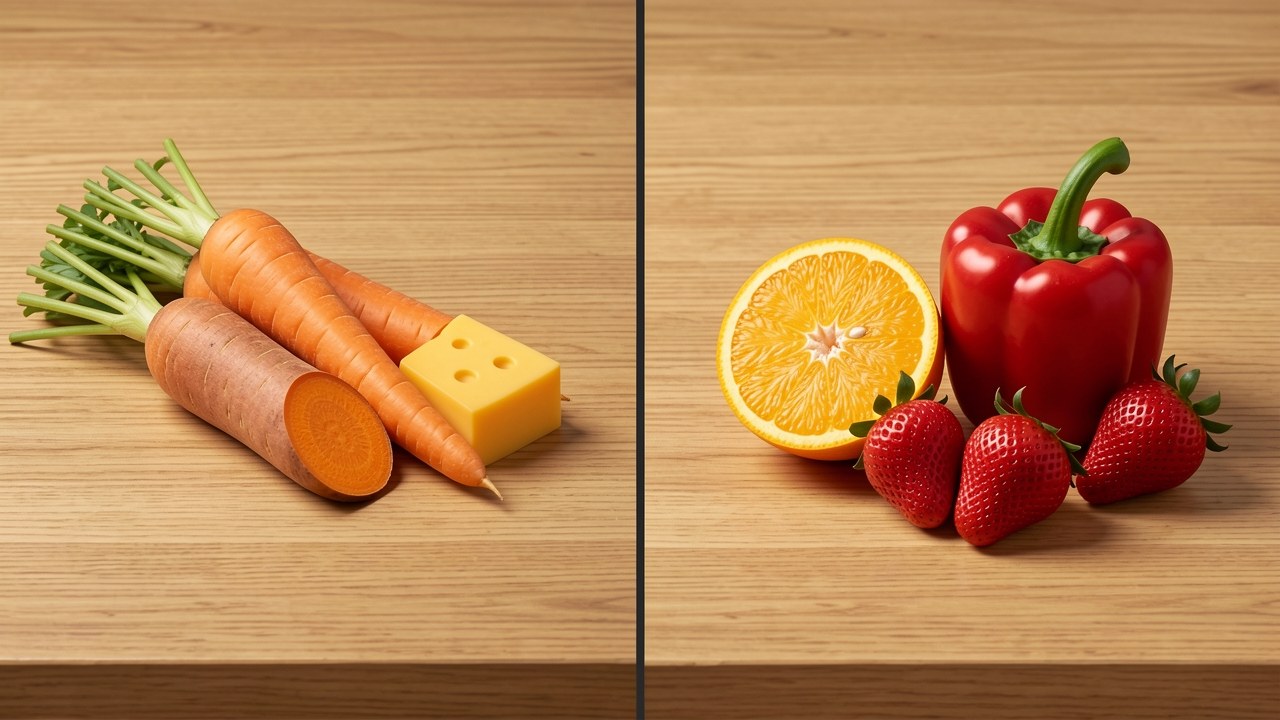
Getting enough of both vitamins through diet is achievable by eating a variety of foods. Vitamin A is abundant in animal sources like liver, dairy products, eggs, and oily fish. Plant-based sources rich in beta-carotene include orange and yellow fruits and vegetables, such as carrots, sweet potatoes, and mangoes.
Vitamin C is plentiful in citrus fruits like oranges and grapefruits. Other excellent sources include red and green peppers, kiwi fruit, broccoli, strawberries, and Brussels sprouts. Because vitamin C is water-soluble and heat-sensitive, cooking can reduce its content; eating some foods raw or lightly cooked helps preserve it.
For most people, a balanced diet provides adequate amounts of both vitamins. However, certain groups may have higher needs, such as smokers for vitamin C or pregnant women for vitamin A and C.
Sources: Nursing Times, MedlinePlus, National Library of Medicine, Office of Dietary Supplements, National Institutes of Health
Recommended intakes and upper limits
Health authorities set recommended dietary allowances (RDAs) for vitamins based on scientific evidence. For healthy US adults, the RDA for vitamin A is 900 micrograms retinol activity equivalents (mcg RAE) per day for men and 700 mcg RAE per day for women. The RDA for vitamin C is 90 milligrams (mg) per day for men and 75 mg per day for women.
Smokers need an additional 35 mg of vitamin C per day above the RDA due to increased oxidative stress from smoking. Pregnant and lactating women have higher requirements for both vitamins: for example, vitamin C needs increase to 85 mg/day during pregnancy and 120 mg/day while lactating.
Tolerable upper intake levels (ULs) are the highest daily intake unlikely to cause adverse health effects. For preformed vitamin A, the UL for adults is 3,000 mcg RAE per day, a level not applied to provitamin A carotenoids from food. For vitamin C, the UL is 2,000 mg per day for adults, a dose unlikely to be reached through diet alone.
- Vitamin A: Adult men 900 mcg RAE/day; adult women 700 mcg RAE/day; upper limit 3,000 mcg RAE/day.
- Vitamin C: Adult men 90 mg/day; adult women 75 mg/day; upper limit 2,000 mg/day.
Sources: Merck & Co., Inc., Health Canada, Office of Dietary Supplements, National Institutes of Health, MedlinePlus, National Library of Medicine, Harvard T.H. Chan School of Public Health
Deficiency and toxicity risks
Vitamin A deficiency can develop over time because the body stores it. Night blindness is an early sign, and severe deficiency can progress to xerophthalmia, a leading cause of preventable blindness in children. Because vitamin A is fat-soluble, excess intake from supplements or liver can accumulate and cause toxicity, with symptoms that may include liver damage and birth defects.
Vitamin C deficiency occurs more quickly, within weeks to months, because your body does not store it. Severe deficiency leads to scurvy, marked by fatigue, connective tissue weakness, and capillary fragility. Vitamin C is water-soluble, so excess is excreted in urine, and the upper limit of 2,000 mg/day is based mainly on gastrointestinal discomfort at higher doses.
It is important to emphasize that the upper limit for vitamin A applies to preformed vitamin A (as retinol or retinyl esters) from supplements, fortified foods, or liver; high intake of provitamin A carotenoids from foods is not associated with toxicity.
Sources: Merck & Co., Inc., Nursing Times, MedlinePlus, National Library of Medicine, Office of Dietary Supplements, National Institutes of Health
Choosing foods for both nutrients
To meet your needs for both vitamins, aim for a colorful plate. Pair foods rich in vitamin A with those high in vitamin C. For example, a salad with spinach (beta-carotene) and red pepper (vitamin C) covers both, and adding a source of fat, like olive oil, helps your body absorb the fat-soluble vitamin A.
Consider a typical meal: baked salmon (vitamin A) with a side of broccoli (vitamin C) and sweet potato (beta-carotene). This combination provides a wide range of nutrients.
There is no need to choose between vitamin A and C; they are complementary. A balanced diet that includes a variety of fruits, vegetables, dairy, and protein sources will generally provide adequate amounts of both.
- Include liver, dairy, eggs, and orange or yellow vegetables for vitamin A.
- Add citrus fruits, peppers, kiwi, and broccoli for vitamin C.
- Pair fat-soluble vitamin A foods with a little dietary fat to enhance absorption.
- Eat vitamin C-rich foods raw or lightly cooked to preserve the nutrient.
Sources: Nursing Times, MedlinePlus, National Library of Medicine, Office of Dietary Supplements, National Institutes of Health
Evidence-backed comparison matrix
The table below summarizes key differences between vitamins A and C based on authoritative sources, including the National Institutes of Health and Merck Manual. This comparison can help you understand their distinct characteristics at a glance.
| Option | Category | solubility | adult_male_rda | adult_female_rda | upper_intake_level |
|---|---|---|---|---|---|
| Vitamin A | vitamin | fat-soluble | 900 mcg RAE/day | 700 mcg RAE/day | 3000 mcg RAE/day |
| Vitamin C | vitamin | water-soluble | 90 mg/day | 75 mg/day | 2000 mg/day |
Sources: Merck & Co., Inc., PeerJ (via PMC), Nursing Times, MedlinePlus, National Library of Medicine, Health Canada, Office of Dietary Supplements, National Institutes of Health, Harvard T.H. Chan School of Public Health
Frequently asked questions
Can you take vitamin A and vitamin C together?
Vitamins A and C are commonly combined in multivitamins. The research reviewed did not examine direct interactions between them; however, their different solubility means they are absorbed separately. Taking them with a meal that contains fat can aid absorption of vitamin A.
Sources: Office of Dietary Supplements, National Institutes of Health, Merck & Co., Inc.Which vitamin is better for immunity, A or C?
Both vitamins play important roles in the immune system. Vitamin A supports mucosal barriers and the production and function of immune cells. Vitamin C supports various immune cells and acts as an antioxidant.
Sources: MedlinePlus, National Library of Medicine, Office of Dietary Supplements, National Institutes of HealthIs vitamin A or C more toxic?
Vitamin A has a higher risk of toxicity because it is fat-soluble and stored in the body. Excessive intake of preformed vitamin A can cause serious effects. Vitamin C is water-soluble, and excess is excreted in urine, but doses above 2,000 mg/day can cause gastrointestinal upset. The upper limit for vitamin A is set at 3,000 mcg RAE per day for adults, while for vitamin C it is 2,000 mg per day.
Sources: Merck & Co., Inc., Harvard T.H. Chan School of Public HealthDo vitamin A and C interact in the body?
The reviewed studies did not directly compare interactions between vitamins A and C. They have different solubility and absorption pathways. Vitamin C can enhance iron absorption, which is unrelated to vitamin A metabolism.
Sources: Office of Dietary Supplements, National Institutes of Health, Merck & Co., Inc.Sources
- Vitamin C - Health Professional Fact Sheet — Office of Dietary Supplements, National Institutes of Health
- Revisiting food-sourced vitamins for consumer diet and health needs — PeerJ (via PMC)
- Overview of Vitamins - Nutrition - Merck Manual Professional Edition — Merck & Co., Inc.
- Vitamins A and C: their function and structure explained — Nursing Times
- Vitamins: MedlinePlus Medical Encyclopedia — MedlinePlus, National Library of Medicine
- Vitamin C: MedlinePlus Medical Encyclopedia — MedlinePlus, National Library of Medicine
- Vitamin C - The Nutrition Source — Harvard T.H. Chan School of Public Health
- Dietary reference intakes tables: Reference values for vitamins — Health Canada